SaaS / Enegaeru Biz · Kokusai Kogyo
Build the case for commercial solar and storage.
Evaluate on-site solar PV and battery energy storage for factories, warehouses and commercial facilities using facility demand, Japanese electricity tariffs and project assumptions.
Evaluate the renewable energy investment against the facility’s demand.
Factories, warehouses, stores and other commercial or industrial sites have different load profiles. Enegaeru Biz helps EPCs, installers, manufacturers and energy providers compare on-site solar PV and battery storage against those patterns.
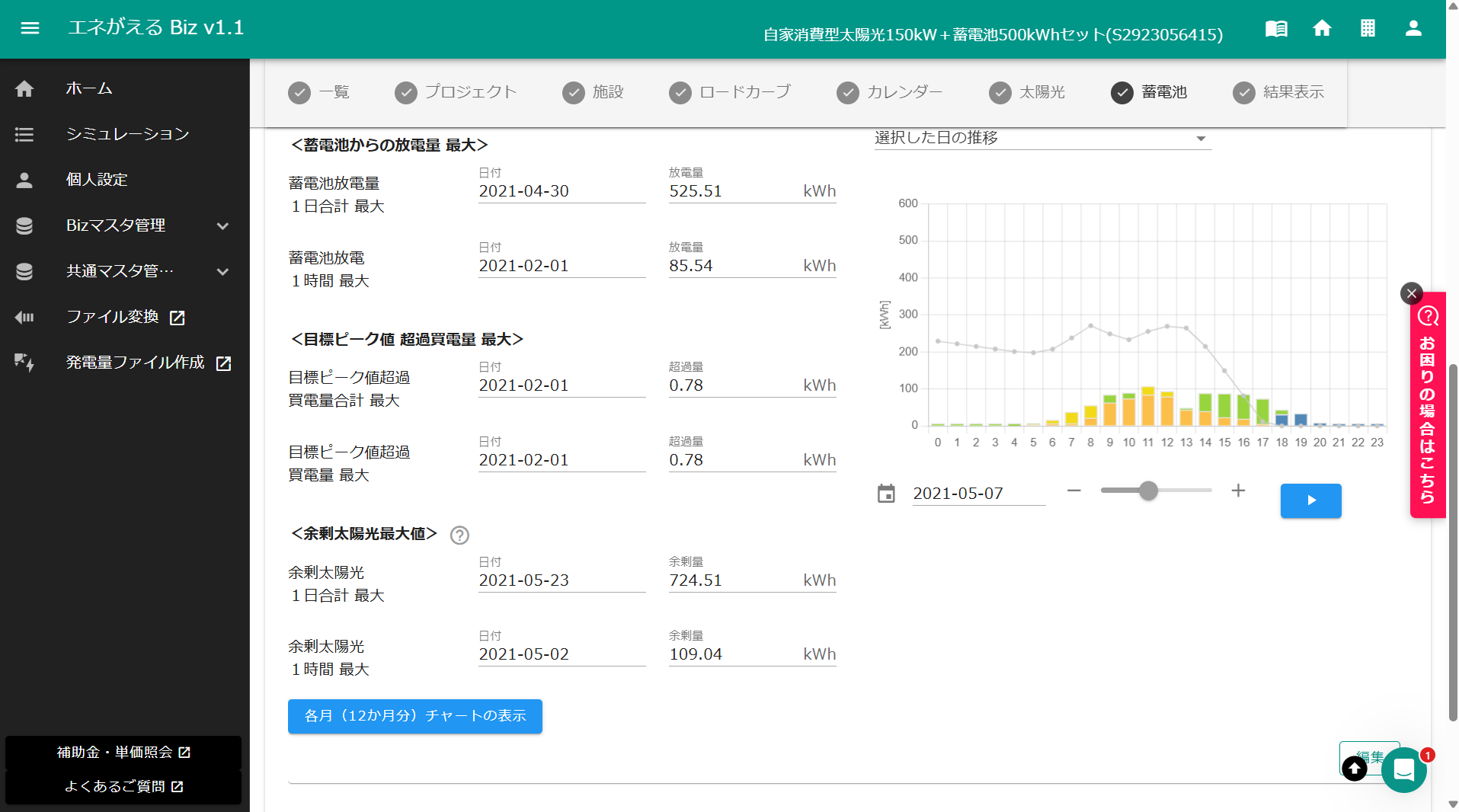
Use an industry load curve for an early estimate where appropriate, then replace it with measured demand data for a detailed proposal. Supported 30-minute demand inputs help examine self-consumption, grid purchases, surplus generation and battery peak-reduction scenarios.
Separate the equipment decision from the commercial arrangement: customer ownership, an on-site PPA and a lease allocate costs and responsibilities differently. Bring the proposed contract and cash-flow assumptions to confirm the appropriate product or BPO scope. For off-site supply and multiple generation or demand facilities, use the corporate PPA route.
Explore corporate PPA evaluation → · Commission a project-specific analysis →
Visual explainer
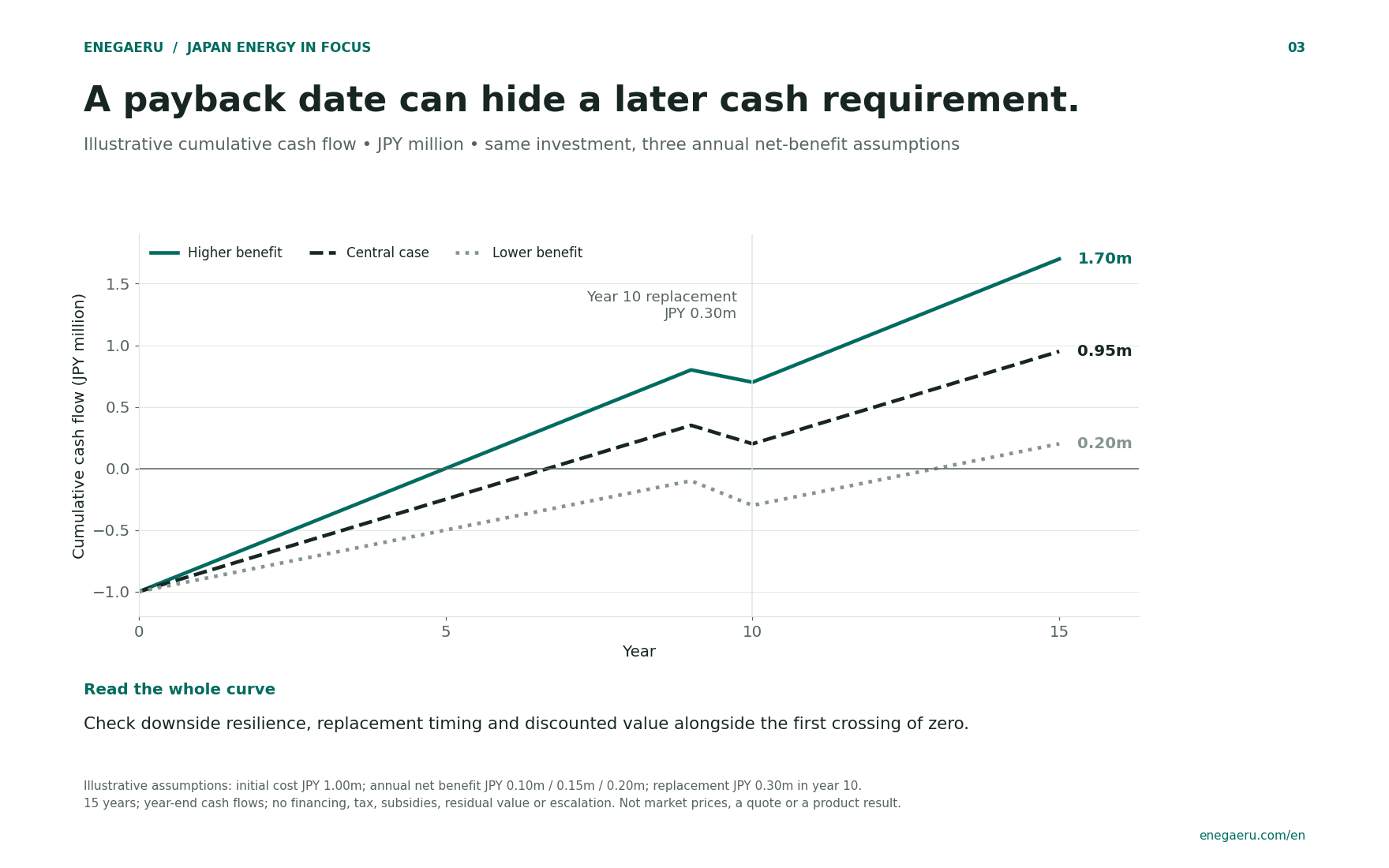
Read the cash-flow curve beyond the payback date.
Read the diagram, assumptions and sources
Common assumptions: JPY 1,000,000 paid at year 0; JPY 300,000 replacement cost at the end of year 10; 15 years of end-of-year cash flows. Annual net benefit before the specified replacement is JPY 100,000, JPY 150,000 or JPY 200,000. These are editorial assumptions, not market prices or quotes. The chart is undiscounted.
At an illustrative 3% annual discount rate, NPV is approximately −JPY 29,435 (lower benefit), JPY 567,462 (central case) and JPY 1,164,359 (higher benefit). NPV means the sum of cash flows discounted to year 0. Calculation: −1,000,000 + annual benefit × [1 − (1.03)−15] / 0.03 − 300,000 / (1.03)10.
No financing, taxes, subsidies, residual value, escalation or separate degradation is modeled. Annual net benefit is held constant. For a project decision, replace these assumptions with a consistent, project-specific model and test applicable costs and timing. These scenarios are not probabilities or product performance claims.
Designed for your team’s work
EPCs; commercial storage suppliers; PPA developers; facility owners.
What you bring
- Facility demand data
- solar layout and generation assumptions
- battery specifications and operating settings
- tariffs, capital costs and project assumptions
What you can evaluate or receive
- Compare self-consumption and purchased energy
- assess electricity cost reductions and payback
- export results for project review
A practical first evaluation
Use a complete year of interval demand where available. Identify missing data, the tariff baseline and the decisions that change when capacity or operating assumptions change.
Scope to confirm
Demand-charge treatment, model time resolution and battery settings must be checked for the project. A modeled peak reduction is not automatically a reduction in contracted demand.
A view of the product
Before you commit
Can we use this as part of our Japan launch?
Tell us your customer segment, local operating model and first use case. We will discuss product fit and any additional data, integration, training or specialist work required.
Is the software or delivery available in English?
This page is an English introduction. Confirm interface, documentation, report and support languages for the product or engagement. Bilingual outputs and localization should be specified explicitly.
How are commercial terms agreed?
Request a quotation for the product, users or usage, data rights, scope and support you need. Confirm implementation fees, recurring fees, contract term and any project work before ordering.
Product information and related routes
Bring us the next decision you need to make.
Tell us what you want to launch in Japan, who will use it, and where the work is getting stuck. We can discuss the right combination of software, APIs, data and specialist support.